
Finding this blue-eyed bird of the year in the Overberg
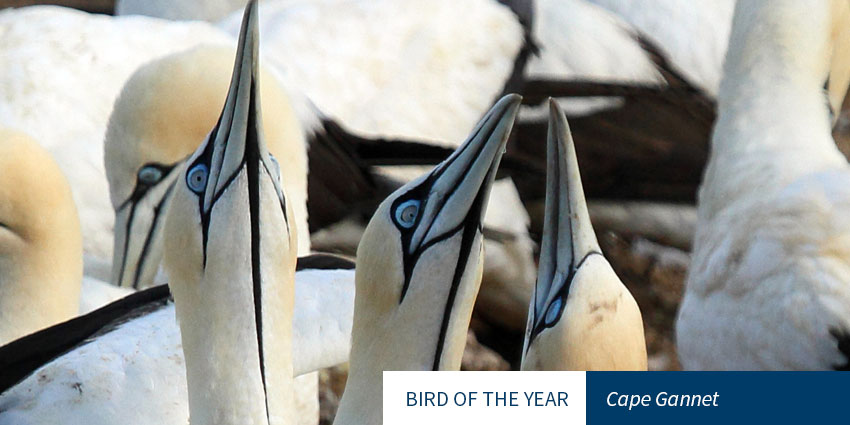
Cape Gannet might not breed in the Overberg,
but they do live on our coastline, and have a couple of favourite Overberg spots. And while the Cape Gannet is not specifically on our Overberg Crane Group watchlist (see those birds we’re involved in protecting here) they’ve been placed in the limelight as the BirdLife South Africa Bird of the Year. For BirdLife SA, there’s reason to worry about the Cape Gannet (Morus capensis) because of their increasingly worrying conservation position.

They’re endemic to South Africa and Namibia. But their breeding sites are increasingly vulnerable – threatened by massive declines in sardine populations from overfishing, guano mining in the past, and natural predation by Cape Fur Seals today.
They’re currently listed as Endangered globally (their regional listing is Vulnerable) – with population numbers falling around 50% since the 1960s.
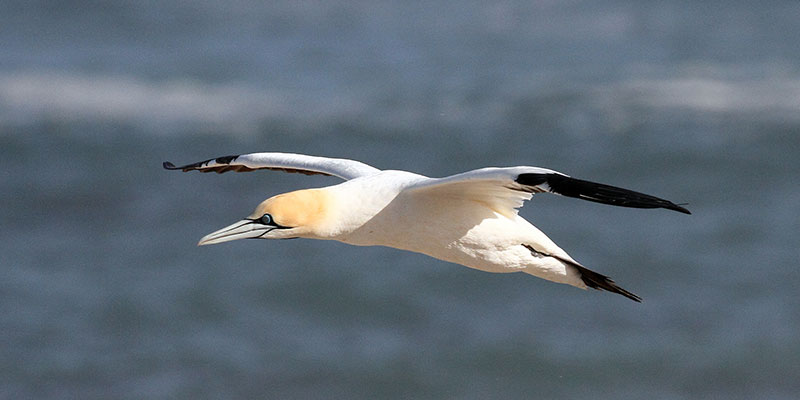
Some interesting Cape Gannet facts:
- They pair for life and woo each other with an impressive neck-stretching dance.
- They dive for their food (large schools of fish) – hovering in the air and then diving headfirst into the ocean, sometimes at speeds of up to 120km/hour.
- They can dive up to 20m underwater.
- Their bills have fine serrations at the tip, which help them catch fish.
- They also don’t have external nostrils that water can enter when they dive.
Where can you see them in the Overberg?
There are a couple of spots to visit where you could see Cape Gannet (where they have been seen in the past):
- Dyer Island
- Stony Point in Betty’s Bay
- De Hoop Nature Reserve
- De Mond Nature Reserve
- Along the coast in Hermanus, at Vermont
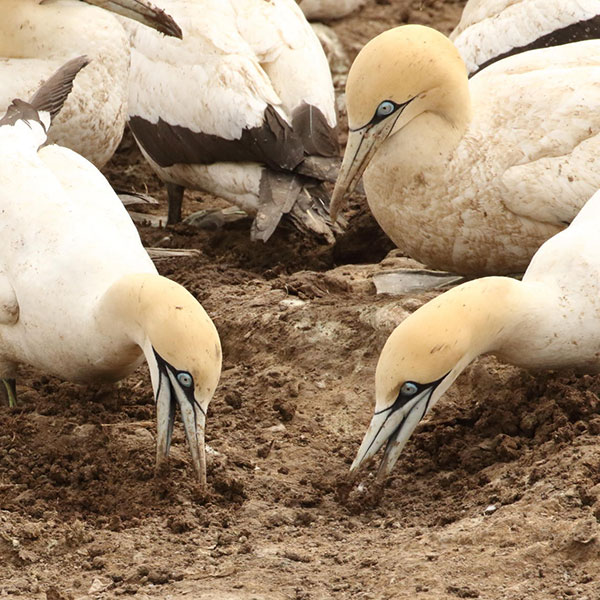
Our special photo credit
These fantastic Cape Gannet photos were taken by our OCG Board member, Stuart Shearer on the Bird Island Reserve near Lambert’s Bay and shared on iNaturalist. Stuart not only photographed birds, but also worked hard to protect them until his untimely death in 2019 after a short illness.
Images: Stuart Shearer